“Risk management is not a function; it is a way of thinking.”
— James Lam, Risk Management Authority
In today’s fast-changing corporate environment, risk and insurance management must go beyond departmental silos. Success depends on strong internal partnerships that bring together HR, operations, procurement, finance, and other functions to anticipate and respond to risks more effectively.
Editor’s Note: This blog post is a prelude to an upcoming video interview by RIMS USA, scheduled to be published shortly.
Why Internal Partnerships Matter
Risk is never isolated—it’s woven through every aspect of an organization. Robust internal partnerships empower companies to spot risks early, align on solutions, and safeguard both assets and reputation. For example, when sanctions complicated supply chain risks, collaboration between teams enabled us to structure innovative solutions. This proactive approach transformed a potential vulnerability into a win for the entire organization.
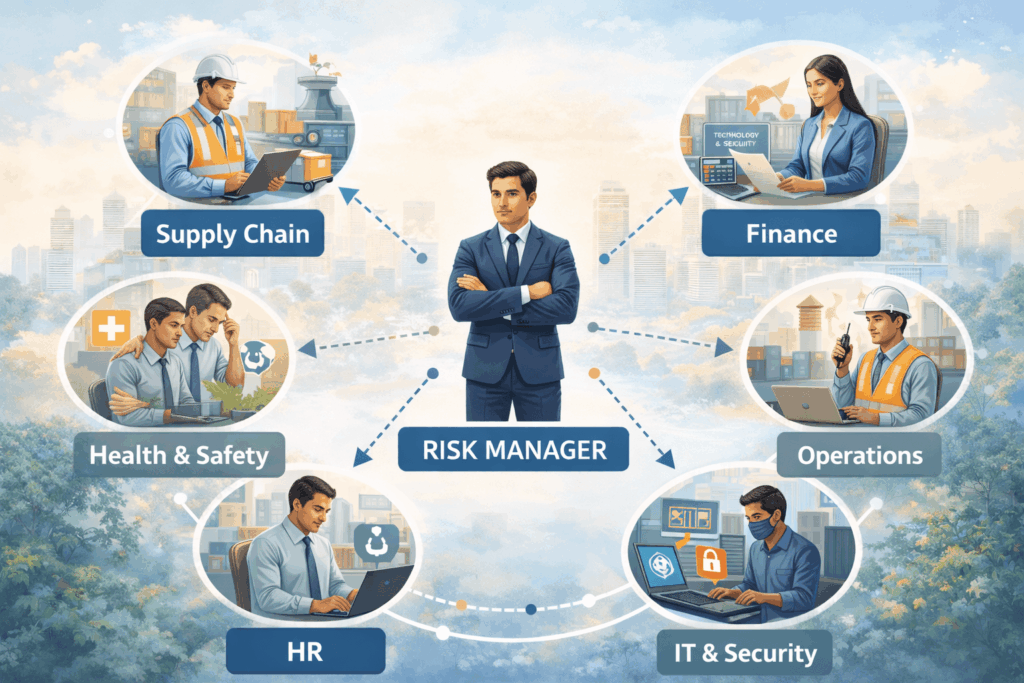
Risk Management in Large Corporations
The Impact of Collaboration on Corporate Resilience
Cross-functional collaboration leads to better-informed decisions and customized insurance solutions that reflect real-world exposures, cutting costs and boosting resilience.
One example comes to mind from my previous organizations. We had many warehouses that were leased round the year. To ensure that the risk was covered from the date of occupancy, we created a COPE form which captured the majority of the details generally asked by insurers—along with details of fire-fighting equipment and photographs of the buildings and fire extinguishers. This helped cover the risk from the date of occupancy without requiring physical inspection at that time.
As a prudent risk management practice, we established a risk calendar where warehouses, plants, and other facilities were inspected once every three years. Recommendations were given to the operations team with clear timelines for completion. The risk mitigation measures were monitored and updated on a quarterly basis by the respective operations teams, and at the time of renewal, this data was shared with insurers.
Initially, there was resistance from the operations team to work on risk improvement measures. But when we were able to demonstrate that such measures led to significant savings in insurance premiums, senior leadership emphasized the importance of these activities. Eventually, it became a part of the overall risk management framework.
When risk managers team up with operations, they build insurance programs tailored to actual needs—rather than theoretical risks—protecting every corner of the business.

Corporate risk management
Strategies to Build Strong Internal Partnerships
No partnership forms overnight. Intentional strategies make collaboration natural and effective.
1. Workshops and Education Initiatives
Regular workshops led by risk experts break down insurance jargon and explain coverage in plain language. Ready-reckoners and handbooks that are easily accessible through the intranet ensure team members know exactly how to report new risks and initiate claims, reducing confusion and missed opportunities for coverage.
2. Embedding Risk Liaisons in Business Units
Appointing risk liaisons within key business units bridges gaps between daily operations and strategic risk planning. These partnerships ensure everyone’s input shapes insurance decisions for both big projects and everyday processes.
3. Measuring Collaboration Success
Success is tracked through joint project outcomes, feedback surveys, and clear metrics. These help continuously refine collaboration and ensure it moves the dial on business results.
Overcoming Common Challenges
Despite best intentions, departments may prioritize growth or operational work over risk management. Here’s how strong partnerships overcome these barriers.
1. Aligning Priorities Across Teams
Demonstrate the shared value: better insurance means cost savings or avoiding losses. When teams see tangible benefits, what was once resistance becomes motivation.
2. Clear Communication and Leadership Buy-In
Too much jargon or unclear processes frustrate teams. Use dashboards and simple language to keep everyone informed. Leadership buy-in ensures risk management is seen as a priority—not just a tick in the box—across all levels.
The Future of Internal Partnerships in Risk
Tomorrow’s risks require flexible and technology-driven partnerships.
1. Leveraging Technology and Analytics
Embrace AI-driven platforms and data analytics to generate shared insights, driving continual risk improvement. Technology helps keep everyone on the same page and ready to react to emerging threats like cyber or climate risks.
2. Fostering a Culture of Continuous Learning and Adaptability
Encourage feedback, celebrate joint wins, and always look for ways to innovate. As risks evolve, so must the collaboration between teams. Regularly revisiting partnership strategies keeps everyone resilient and ready for what comes next.
Internal Partnerships in Corporate Risk Management
Key Takeaways
- Early risk identification and tailored insurance depend on genuine partnership across departments.
- Workshops and clear handbooks help make risk processes accessible to all staff.
- Leadership support and transparent communication overcome obstacles to collaboration.
- Data-driven tools further enhance the impact of internal partnerships.
- Staying adaptable and prioritizing continuous improvement equips organizations to thrive amidst new risk realities.
BIMA GYAAN (Simplified)
Risk Appetite
Risk appetite refers to the amount and type of risk an organisation is willing to accept in
pursuit of its objectives. In simple terms, it explains how much uncertainty an organisation
is comfortable with while making business decisions—for example, whether it is willing to
enter a new Indian market, launch a new product, or accept higher costs in exchange for faster
growth.
You may also like to read:
- Interview with Risk and Insurance Management Society
- Winning RIMS Honour Roll 2024
- Interview: Holistic Risk Management in India
Strong internal partnerships move organizations from reactive to proactive risk management. They lead to smarter insurance decisions, cost savings, and greater resilience in the face of uncertainty. Continuous education, embedded liaisons, and advanced technologies lay a foundation for future-proofing businesses against tomorrow’s risks.