In mid-June 2024, I had the privilege of attending an exceptional panel discussion organized by the Pan Asia Risk and Insurance Management Association (PARIMA) in Mumbai. The session, titled “Narrowing the Gap with Parametric Insurance,” was part of PARIMA’s Dynamic Huddles series, and I can confidently say it was one of the most insightful insurance events I’ve experienced in my two decades in the industry.
Parametric Insurance : Narrowing the Gap
Moderated by Mrunal Pandit, FIII, RIMS-CRMP, this engaging session brought together industry experts to explore how parametric insurance could revolutionize the way we approach risk management in India. The event attracted risk and insurance professionals from across the region, all eager to understand this innovative insurance solution that promises to address some of the fundamental challenges plaguing traditional insurance models.
Understanding Parametric Insurance Solutions
For those unfamiliar with the concept, parametric insurance represents a fundamental shift from traditional indemnity-based insurance. Unlike conventional policies that compensate you for actual losses incurred—often after lengthy claims assessments and documentation—parametric insurance pays out a predetermined amount based on the occurrence of a specific, measurable event.
Think of it this way: if your business has parametric insurance for rainfall, and the rainfall in your area drops below a certain threshold (say, 50mm during the monsoon season), you automatically receive a payout. There’s no need to prove your actual loss, no lengthy damage assessments, and no mountains of paperwork. The trigger event occurs, and the money flows. It’s that straightforward.
During the PARIMA event, the panelists emphasized that parametric insurance is particularly valuable for risks that are difficult to assess through traditional means. Natural disasters, weather-related disruptions, and other objective, measurable events are ideal candidates for parametric coverage. This makes it especially relevant for Indian businesses operating in sectors vulnerable to climate risks, agricultural dependencies, and infrastructure challenges.
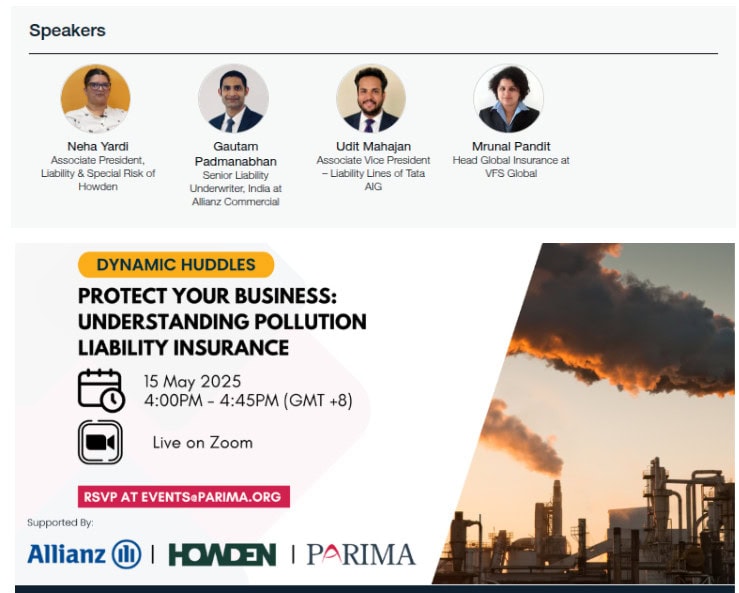
Speaker Profile and Event Details- Parima Dynamic Huddles, 2025
Event Speakers
Key Benefits of Parametric Insurance Coverage
One of the most compelling aspects of the discussion was the exploration of parametric insurance benefits. The panelists highlighted several advantages that resonated deeply with my experience advising startups and established businesses alike.
Speed of settlement emerged as the primary advantage. In traditional insurance, claims can take months—sometimes even years—to settle. For a startup operating on tight cash flows, such delays can be catastrophic. Parametric insurance eliminates this problem entirely. Since payouts are triggered by objective data points (like earthquake magnitude, wind speed, or rainfall measurements), settlements can occur within days or even hours.
Reduced administrative burden was another significant benefit discussed. Traditional insurance requires extensive documentation: damage assessments, repair estimates, loss calculations, and negotiations. Parametric insurance bypasses all of this. The parameters are defined upfront in the policy, and when the trigger event occurs, the payout is automatic. This dramatically reduces both administrative costs and the potential for disputes.
Transparency and predictability also featured prominently in the discussion. With parametric insurance, both insurers and policyholders know exactly what events trigger payouts and how much will be paid. This clarity eliminates the ambiguity that often plagues traditional insurance relationships. For startups preparing financial projections and managing investor expectations, this predictability is invaluable.
Real-World Applications for Indian Businesses
What I found particularly valuable about the PARIMA panel was the practical, real-world focus. The discussion wasn’t just theoretical; it examined actual applications of parametric insurance that could benefit Indian businesses across various sectors.
The agricultural sector emerged as an obvious candidate. With Indian farmers perpetually vulnerable to monsoon variability, parametric rainfall insurance can provide immediate financial relief when rainfall falls short. Rather than waiting for crop damage assessments, farmers receive automatic payouts based on rainfall data from weather stations. This immediate liquidity can be the difference between recovering from a bad season and financial ruin.
For the travel and tourism industry—particularly startups in the hospitality and experience economy—parametric insurance can cover losses from extreme weather events that deter tourists. If temperatures in a hill station exceed certain thresholds or if coastal resorts face excessive rainfall during peak season, automatic payouts can compensate for lost revenue without requiring proof of individual booking cancellations.

Technology’s Role in Parametric Insurance
One of the most exciting aspects of the PARIMA discussion was the emphasis on technology as an enabler. The panelists explained how advancements in data analytics, Internet of Things (IoT) devices, and satellite technology have made parametric insurance increasingly viable and accurate.
Weather stations, IoT sensors, seismic monitors, and satellite imagery provide real-time, verifiable data that can trigger parametric insurance payouts. This technological infrastructure eliminates disputes about whether trigger events occurred—the data is objective and indisputable. For startups in the insurtech space, this represents a massive opportunity to develop innovative parametric products tailored to Indian market needs.
During the panel, there was also discussion about blockchain technology’s potential role in parametric insurance. Smart contracts could automatically execute payouts when trigger conditions are met, further streamlining the process and eliminating human intervention. For a country like India, where insurance penetration remains low partly due to distrust and complexity, such technological innovations could be transformative.
Challenges and Considerations
Despite the enthusiasm surrounding parametric insurance, the PARIMA panel didn’t shy away from discussing challenges. As someone who’s spent years navigating the complexities of the Indian insurance landscape, I appreciated this balanced perspective.
Basis risk—the risk that the parametric trigger doesn’t perfectly correlate with actual losses—was acknowledged as a significant consideration. For example, your business might experience losses even if rainfall doesn’t fall below the trigger threshold, or conversely, you might receive a payout when your actual losses are minimal. Designing parameters that accurately reflect real-world risk exposure requires sophisticated modeling and local expertise.
Regulatory considerations were also discussed. While the Insurance Regulatory and Development Authority of India (IRDAI) has been progressively modernizing regulations, parametric insurance products still require careful structuring to comply with Indian insurance laws. The panel emphasized the importance of working with knowledgeable advisors who understand both the technical aspects of parametric insurance and the regulatory framework.
Awareness and education remain significant barriers. Most Indian businesses—particularly startups and SMEs—are unfamiliar with parametric insurance. Events like PARIMA’s Dynamic Huddles play a crucial role in building awareness, but widespread adoption will require sustained education efforts from insurers, brokers, and industry associations.
Key Takeaways from PARIMA Dynamic Huddles
Reflecting on the PARIMA event several months later, several key takeaways continue to resonate with me. First, parametric insurance is not a replacement for traditional insurance but rather a complementary solution that addresses specific gaps. Smart risk managers will use both traditional and parametric coverage strategically to build comprehensive protection.
Second, the Indian market is particularly well-suited for parametric insurance innovation. Our exposure to climate risks, the vulnerability of certain sectors to weather variability, and the growing sophistication of our data infrastructure create ideal conditions for parametric solutions to flourish. Startups and established businesses alike should explore how parametric insurance might strengthen their risk management strategies.
Third, collaboration is essential. The success of parametric insurance in India will depend on cooperation between insurers, reinsurers, technology providers, regulators, and end-users. Forums like PARIMA provide invaluable networking opportunities where these stakeholders can connect, share insights, and develop innovative solutions together.
Conclusion
The PARIMA Dynamic Huddles session on parametric insurance was a resounding success, offering practical insights into an insurance solution that could transform how Indian businesses manage risk. As someone committed to helping startups navigate the insurance landscape, I left the event energized and optimistic about the possibilities parametric insurance offers.
For entrepreneurs and risk managers looking to stay ahead of the curve, I highly recommend engaging with organizations like PARIMA. Their commitment to advancing risk management practices across Asia ensures that professionals like us have access to cutting-edge knowledge and valuable networking opportunities.
The journey toward widespread parametric insurance adoption in India is just beginning, but events like this Dynamic Huddles session demonstrate that we’re moving in the right direction. Whether you’re managing risk for a seed-stage startup or a mature enterprise, understanding parametric insurance should be part of your toolkit as you build resilient businesses for an increasingly uncertain world.