When Work Wipes Your Life: How Cyber Attack Exposes BYOD Dangers
In Mid-March 2026, I posted an article on LinkedIn about the cyber attack on a US based healthcare provider that affected tens of thousands of devices. Below is an expanded version of that post. This cyber attack erased not just work files but also personal photos and family memories. If you use your personal phone for work, your private life is now collateral damage in a corporate security breach.
When Work Wipes Your Life
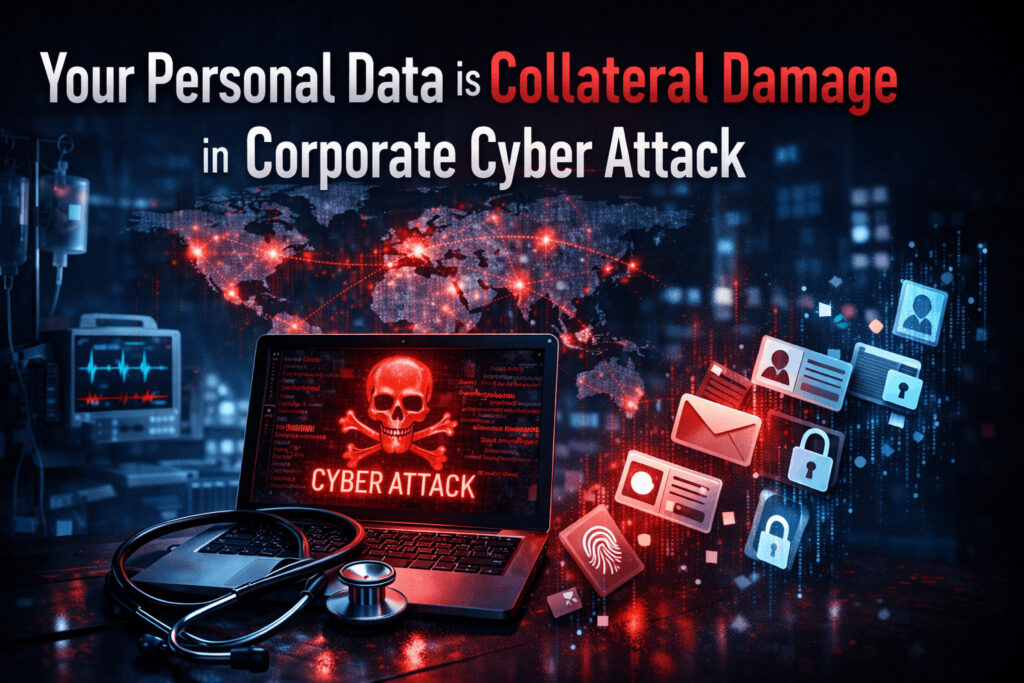
In March 2026, Iran-backed hackers didn’t just steal data from medical giant Stryker; they executed a “wiper” attack that remotely erased information from over 200,000 devices globally. Because many employees linked personal smartphones to work accounts, the remote wipe command didn’t just clear corporate files. For a large number of staff, it probably erased private photos, family contacts, and personal messages. (KrebsOnSecurity, 2026)
The “Convenience” Trap
BYOD policies are often pitched as a win-win: flexibility for you, cost savings for the company. But when personal and work data converge on a single device, the boundary blurs dangerously. If a company’s IT system is breached (as happened with Stryker), or if an administrator makes a critical error, that “remote wipe” command often lacks the granularity to distinguish between a work spreadsheet and a child’s birthday photo. It simply wipes the entire device.
The Legal Safety Net? Maybe Not Enough
For professionals in India, the Digital Personal Data Protection (DPDP) Act, 2023, designates employers as “Data Fiduciaries.” They are mandated to protect employee data and ideally use “containerization” to separate work from personal content. However, laws move slowly. If a phone is wiped today due to a cyberattack, legal recourse begins tomorrow. By the time a case is filed, the personal data is already gone. The Act provides a right to complain, but it cannot restore deleted memories. Relying solely on legislation is a risky strategy.
BYOD Nightmare:A Lesson from 25 Years Ago
This brings to mind a perspective from my spouse. He often recounts a lesson from one of his professors during his time as a graduate student at the University of Illinois Urbana-Champaign in the USA- “Convenience often comes at the cost of security.”
That wasn’t just a lecture; it was a philosophy he has carried for over a quarter of a century. He has long been skeptical of BYOD, arguing that if an organization demands 24/7 connectivity, it should provide the device. Why should the employee bear the financial cost and the security risk?
Looking at the Stryker incident now, that old observation feels incredibly prescient. The “convenience” of having work on a personal phone has indeed cost many people their personal data. The latest attack validates that professor’s warning from 25 years ago.
Food for Thought: Who Really Owns Your Work?
This raises a critical question: If a company can remotely wipe your personal device, does that mean they effectively own it? Many organisations have clauses stating that IP generated during company hours belongs to them. But what about work done on a personal device, during personal time, in a BYOD setup? Can the company claim IP rights to that? This is a grey area many professionals ignore until it’s too late. If you brainstorm ideas on your personal phone after hours, and that device is tied to your work account, where does the ownership lie? The ability to remotely wipe suggests a level of control that extends beyond data—it touches on the very nature of ownership and rights.
What the Stryker Cyber-Attack Teaches Us About Data Ownership
If you use a single device for both work and life:
- Backup Independently: Ensure your personal photos, emails, and documents are backed up to a cloud service outside the company’s control.
- Assume Nothing is Safe: Treat any data on a work-connected device as if it could disappear tomorrow.
- Review Your Contract: Look at the IP clauses in your employment agreement.
- Ask the Hard Questions: If your organization encourages BYOD culture,ask IT: “Does our BYOD policy support granular wiping?”
The Bottom Line: The recent Stryker cyberattack wiped 200,000+ devices, erasing not just work files but also personal photos and family memories. If you use your personal phone for work, your private life is now collateral damage in a corporate security breach.
Note: you can read the post on LinkedIn here. You can find a PDF version of this article here.
Let’s Discuss
This is not just a technology issue; it is a governance and human issue. If you have experienced a remote wipe of your data, or have thoughts on where the line should be drawn between personal and corporate ownership, I would love to hear from you.
